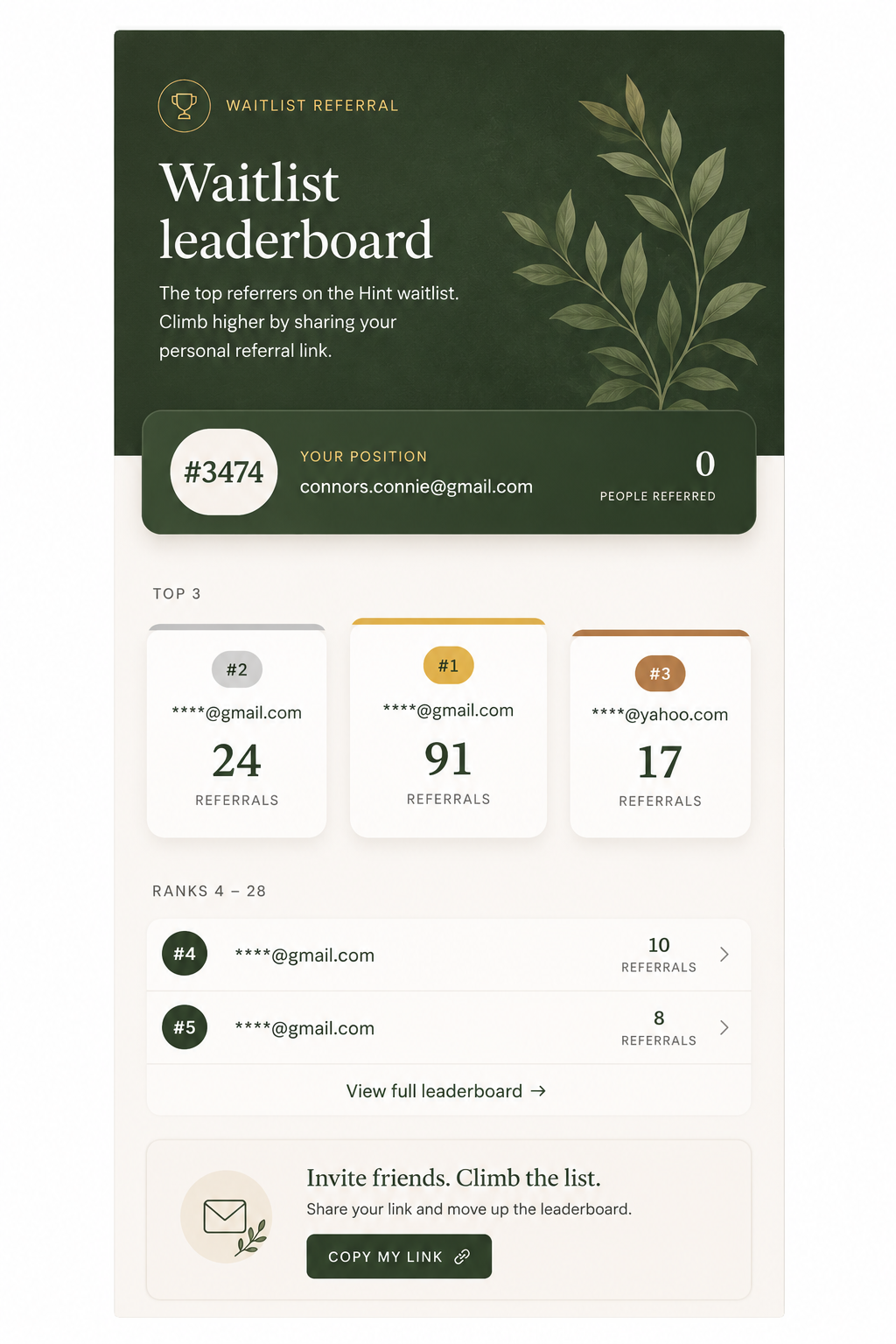
I joined a waitlist this week. Apparently, I'm number 3,474. The leaderboard reminded me of the only time I took a spin class—if I'd seen that number, I would've unclipped and walked out before we even started.
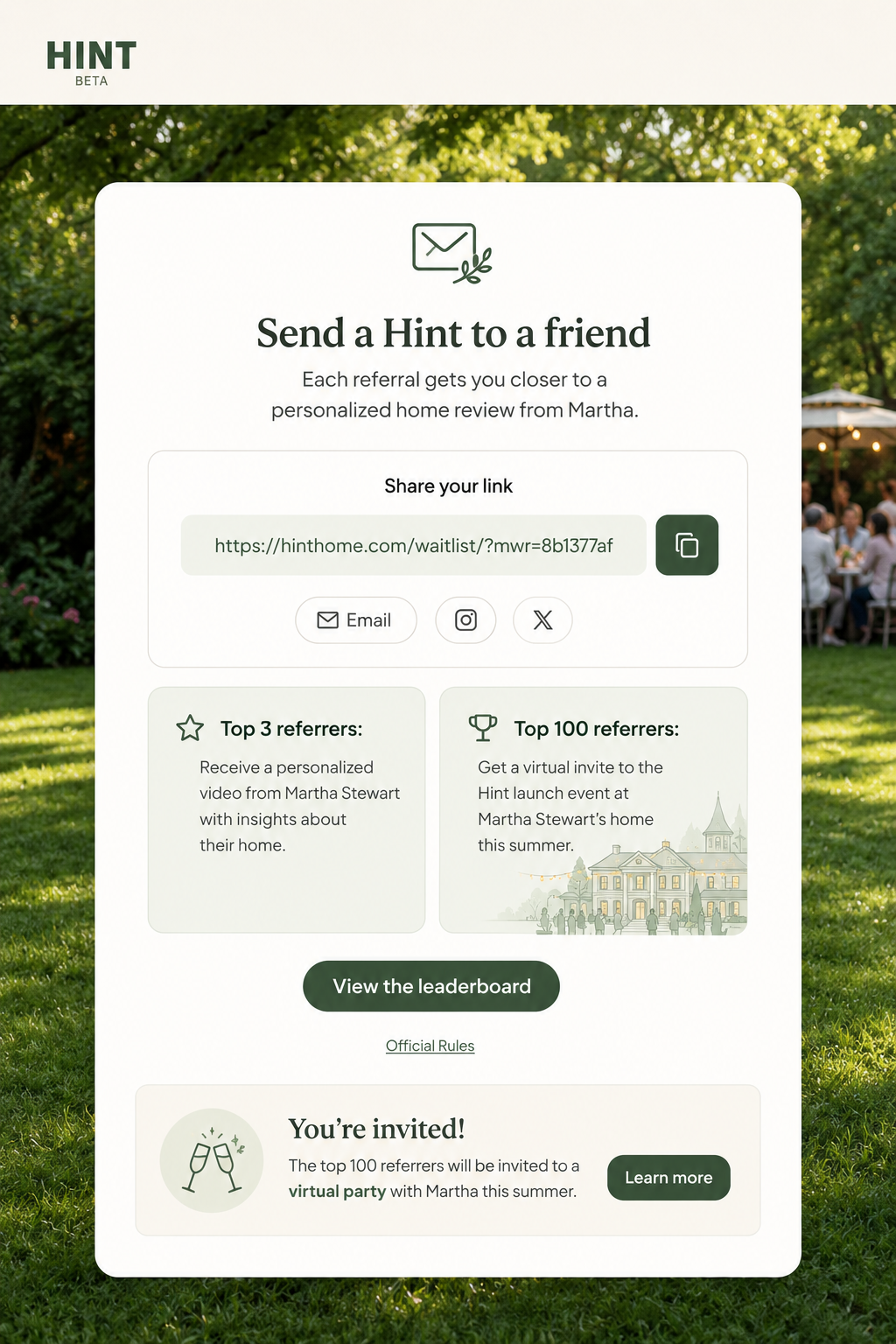
The reward, if I successfully recruit enough friends, is a personal review and video recommendation of my Hint profile (which would include my home) by Martha Stewart. It promises that Martha will know how to design my home better than I do.
Naturally, I gave it my Manhattan mailing address. Within seconds, it knew everything. My “foundation” sits on bedrock and engineered fill. My drainage is excellent. Seasonal soil movement should be minimal.
One problem. It's a mailbox. There is no “house.” The app admitted there was no property listing to pull from, but proceeded to describe the ground beneath a post office.
Nothing it told me was technically false. The geology exists. The public record exists. The AI simply connected unrelated truths into a story that sounded complete.
That's what these systems do: assemble truths into stories that feel complete.
A few days later, another AI company, this one a “one-to-watch” because of its amazing graphics, announced something that to most must sound impossible.
But I knew it wasn't. Midjourney, the company best known for surreal AI art, plans to open a “spa” next year featuring a scanner that maps the human body using hundreds of thousands of tiny ultrasonic sensors while you stand in a shallow pool of water.
Why “spa”? Not because the underlying physics are fantasy. Ultrasound conducted through water is well understood. They're calling it a spa because “medical device” belongs to one regulator and “spa” belongs to another.
Same technology. Different context. Different regulation. Words matter.
But I was excited because it reminded me of Peru. Years ago, I witnessed an Andean curandero, a shaman/healer, perform la shoqma. Chanting, he slowly rubbed a live guinea pig over the man's body. A small group of us were gathered in a covered patio area of the shaman's home, a one-room, mud hut that held his seven children. Afterward he examined the animal, believing it had absorbed – mirrored – the illnesses in the man's body and he returned his diagnosis.
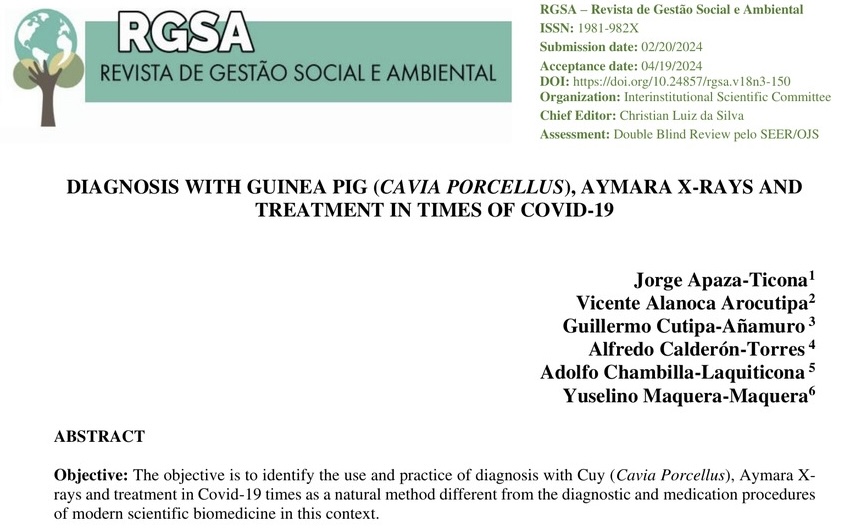
I know what you're thinking: were drugs involved? No. What surprised me wasn't the ritual, it was discovering that anthropologists have referred to this practice as the “Aymara X-ray.” A recent academic paper still uses that language today, and shamans still practice the diagnostic method.
No one called it, or calls it wellness or a spa or biohacking.
How do these things all come together? They're all about costumes. Hint borrows Martha Stewart's credibility. Midjourney borrows the language of wellness. Theranos borrowed black turtlenecks, white lab coats and a boardroom full of distinguished names. The Andean curandero borrowed nothing – no borrowed language, no borrowed authority.
He simply stood behind centuries of traditions and asked you to decide for yourself.
As someone who has spent a career in public relations, presentation matters. We don't just evaluate ideas. We evaluate the people presenting them, the language they use, the rooms they stand in, even the photographs they choose to represent themselves.
This week I also found myself staring at the team photo from TasteLabs, the company behind Hint. They're building a product that promises to understand taste, beauty, and design. Fair or not, I found myself evaluating their own aesthetic choices.

Last year I appeared in a commercial with Martha Stewart.
Except – I didn't.
The Martha everyone watched was composited into the final commercial later. The finished image felt more authentic than the reality that produced it.
AI is forcing us to ask a harder question than whether something is true.
It's forcing us to separate facts, inferences, and presentation.
Maybe that's why I keep thinking about a mailbox built on bedrock, a body scanner disguised as a spa, and a guinea pig once described as an “Aymara X-ray.”
Three very different worlds.
One familiar question.
Who gets to be believed?