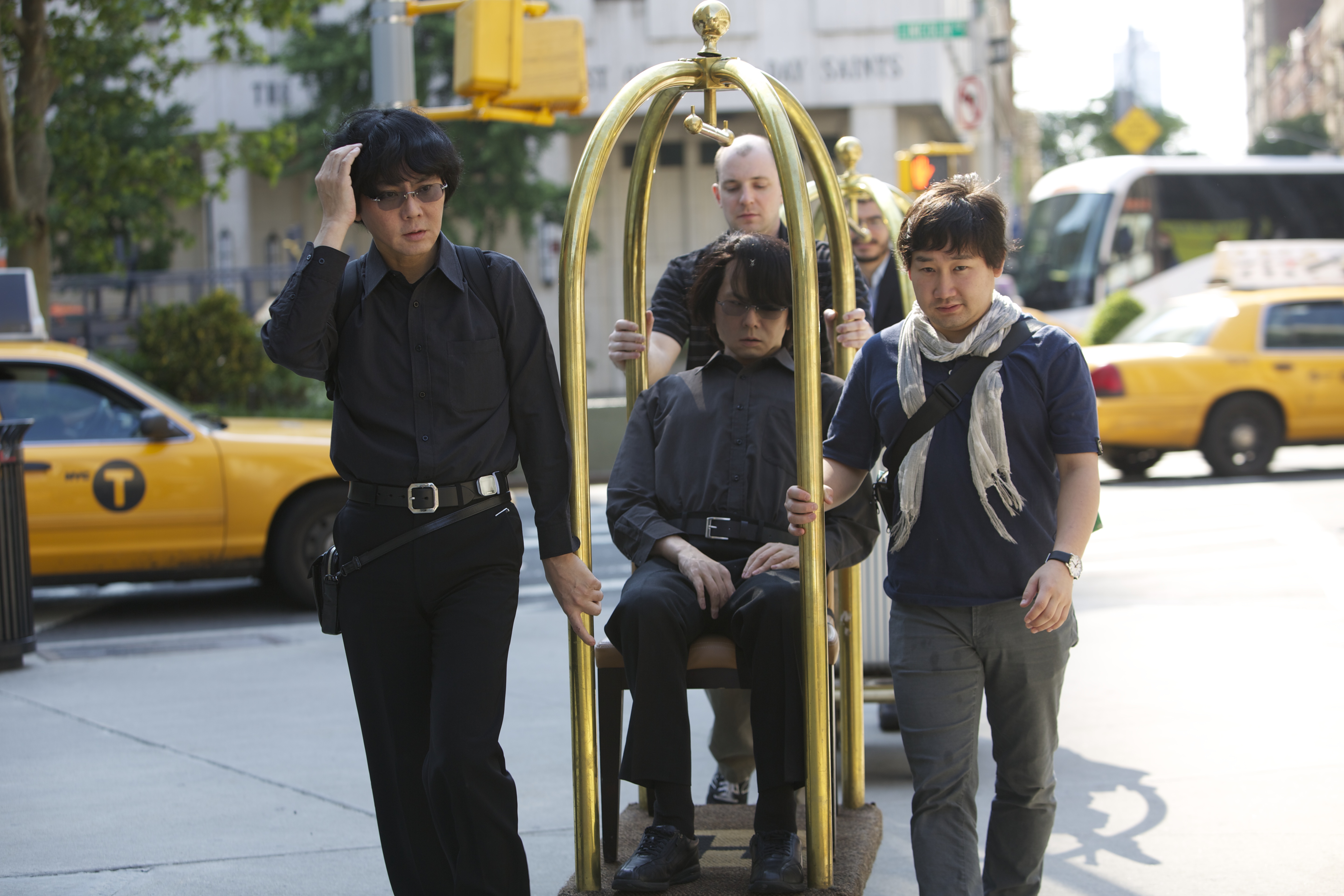
I once wheeled a humanoid robot across 63rd Street on a luggage cart.
Just like children looking behind a talking computer for a person, grown adults were acting like it was a petting zoo in front of Lincoln Center, all trying to touch it.
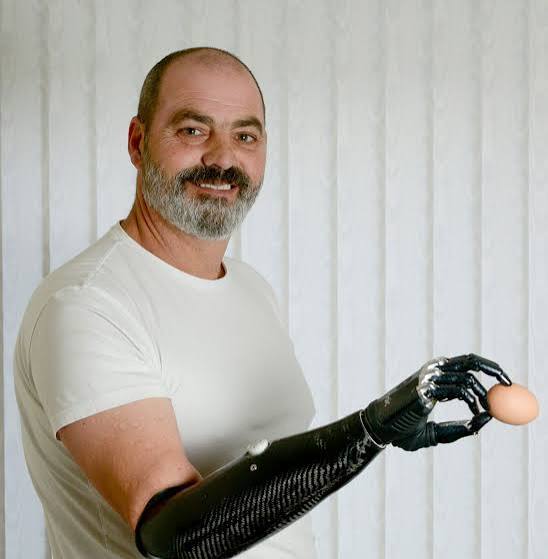
The robot belongs to Professor Hiroshi Ishiguro, one of Japan's leading roboticists. That same week, I met someone far more interesting, Nigel Ackland, a metal worker who had lost his hand in an industrial accident. His prosthetic looks like something out of The Terminator.
But the sci-fi wasn't the remarkable part. Giddy, he showed off how he could tie his shoes once again, pick up a penny and his best “trick” – deal a deck of cards – with that hand.
The best technology isn't the part that makes you say “wow.” It's the part that just slides so seamlessly into society.
This week another robotic hand made the news as the “most groundbreaking robotic hand to hit the scene” (can you laugh a bit with me over that choice of words?) Neo's hand has “25 degrees of freedom” and it can sort grapes by color, pour tea and even perform sign language.
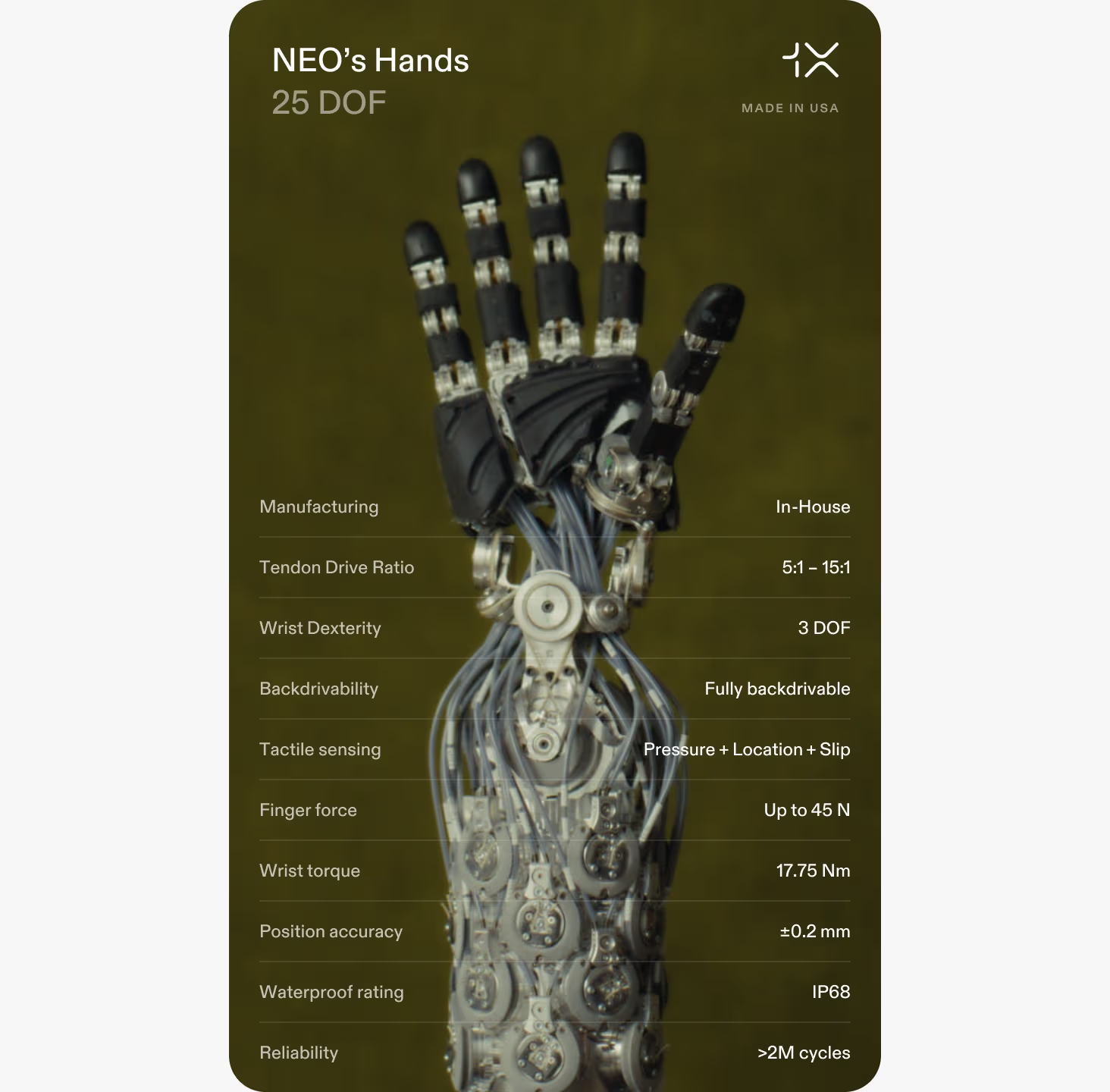
All impressive. But can it pop a zit? That's my benchmark.
Then I noticed something, or the “cookies” did. Instagram has decided I'm in the market for the future. Every third ad is AI hardware. Not software. Hardware.
A tabletop assistant. A pendant you talk to. Glasses. Rings. A floating companion for seniors. A robot that does your laundry.
Actually, it doesn't fold the laundry. It washes. Dries. Irons. I'm waiting for Version 2, the one that remembers to move the clothes out of the washer before they smell.
Three years ago, every company was racing to build the smartest AI.
Now every company is racing to build... a thing.
Why?
At first I thought it was just another gadget cycle. Then a different thought occurred to me.
AI has made software ordinary. Every app writes. Every app summarizes. Every app answers questions. Those used to be headline features. Now they're expected.
So where do you differentiate?
Hardware.
OpenAI certainly knows this. Reports this week describe its first device as a screenless, camera-equipped speaker designed with Jony Ive, with parts that subtly shift to seem alive.
Not because hardware is glamorous. Because software no longer is.
But I don't think that's the whole story.
I've spent most of my career launching technology products, and one thing I've learned is this:
Technology doesn't matter until it changes behavior.
In the late 1990's, Amazon was still convincing people to buy books online. With Priceline, it was telling folks to save money by not calling the travel agent or visiting the airline counter. The problem wasn't the websites. The problem was that lots of people didn't own computers. Our marketing literally suggested finding a friend with a computer — or visiting the public library.
Then along came WebTV: a modem and a keyboard that turned your television into an online device. I helped launch Sony's version. We never marketed it as a computer, and nobody on the team believed it was the end game.
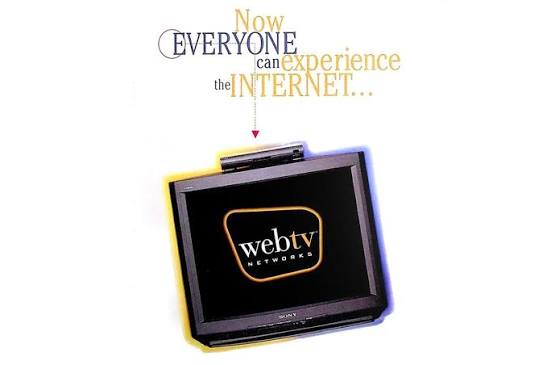
It wasn't trying to be a better computer. It was trying to answer a question: Would people bring the Internet into the living room?
Turns out they would.
WebTV disappeared. The behavior stayed.
Roomba didn't teach us to vacuum. It taught us we'd let a machine wander around the house while we weren't looking.
Alexa didn't teach us voice recognition. It taught us we'd talk to computers like slightly dim roommates.
Maybe today's hardware companies aren't really selling devices.
Maybe they're auditioning behaviors.
Will we wear AI? Talk to it? Let it sit on the kitchen counter? Float beside Grandma? Fold the laundry? Walk into the room, unannounced, when we need help?
Nobody knows. That's why everybody is trying something different.
One of my favorite show-and-tells this week is a helium-filled companion robot, this one from a lab in Japan. Imagine if a Studio Ghibli character and a weather balloon had a baby. It floats around the house, reminds you to take your medication, wakes you up, keeps you company. It even dances.
Will it succeed? Who knows. But somebody has to build Version One.
Version One's job isn't to be perfect. Version One's job is to discover whether humans say, “Actually...I kind of like that.”
Humane's AI Pin was a Version One. It taught us that people don't want to wave their hands in front of their chest to read tiny projected text. That's useful information. Every failed device eliminates one more wrong answer. Humane's pin was supposed to replace the phone.
Which brings me back to those Instagram ads.
Look closely at what they're actually selling.
“Get online without a touchscreen.” “No typing. No apps. Just voice.” “Get access to real AI.”
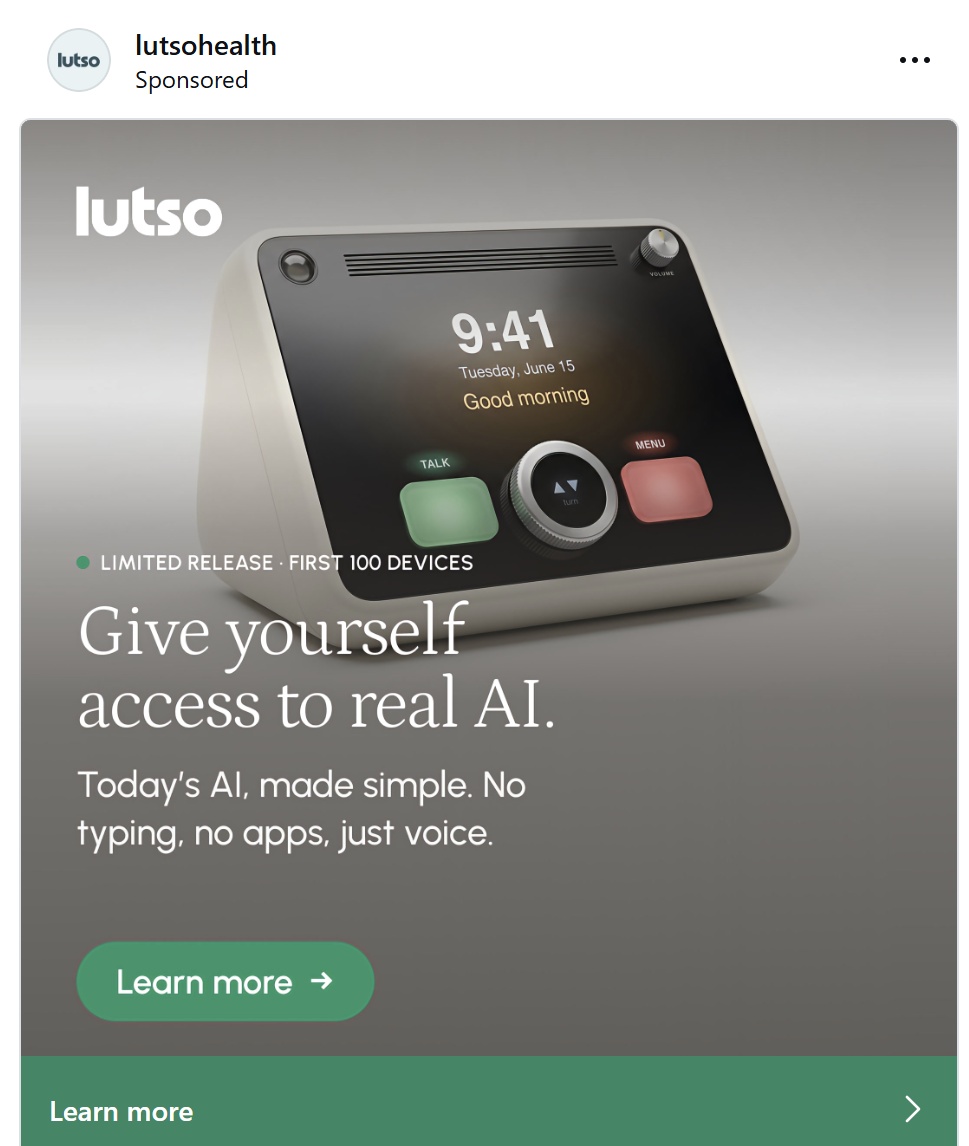
Real AI? As opposed to what — imaginary AI? Diet AI? It's fodder for endless satire: “Are you troubled lately by fake AI?”
Nobody is selling the actual processors anymore. They're selling the disappearance of the interface.
Maybe the next generation of computing asks something different. Maybe the computer adapts to us. Lives in our glasses. Sits on the kitchen counter. Hovers near an elderly woman who could use the company.
I think computers are starting to walk over to us.
I don't know whether the future is glasses or necklaces or robots or floating whales. Most of these products will disappear, just like WebTV did. The interesting part isn't which device wins. It's the behavior each one is auditioning.
So here's the sentence I keep coming back to:
Maybe we're not watching a hardware boom. Maybe we're watching the search for AI's natural habitat.
Not “robots are coming.” Not “hardware matters more than software.” But for the first time since the smartphone, nobody knows where computing wants to live next.
That's a fascinating moment to witness — especially if you've lived through one before. A 28-year-old tech writer can tell you what got announced yesterday. I can tell you this feels exactly like the last time everybody tried to invent the future at once.
Next time you see another ridiculous gadget, don't ask, “Will this work?”
Ask, “What behavior is this one auditioning?”
Most won't get the part. But one of them will teach us how the future wants to behave. And twenty years from now, we'll wonder how we ever lived any other way.