
AI and the Quantum Dance
To make sense of science, the dancer in me always imagines motion. Quantum physics, at its heart, is a dance of particles, constantly moving, adapting, and exchanging energy. It’s also how AI learns.
We barely know AI, and now we’re talking quantum?
The word quantum is being bandied about lately in the stock market and tech circles, which usually means it is becoming a potential reality. This week, Google showed that its quantum machine solved a real, practical chemisty problem 13,000 times faster than the world’s best supercomputer.
Why so fast? Here’s the dance: imagine particles spinning, moving freely, changing all the time. It’s not their size that gives them power; it’s fluidity.
My fascination with quantum physics moved beyond dance into building a successful company culture. I believe I was able to grow a company beyond 100 employees because I instilled the love and power of change in my employees. Without the ability to adapt and “pivot” (a favorite verb among techies), companies often stagnate, unable to truly grow.

AI is edging toward this kind of flexibility. Instead of rigid code, it’s made of probabilities, exploring thousands of paths before landing on one. I know, sometimes you wish that ChatGPT would just give you THE answer. But as AI models grow, they start to behave more like living systems: pattern-based, but always learning. Quantum computing takes that even further: it lets both exist at once, exploring many possibilities before choosing the best one.
The Rise of AI Browsers: More Choreography
In other technology news this week: AI browsers. This isn’t groundbreaking news. It’s inevitable, just like ad-supported AI Chats will be. Does that eliminate some objectivity? Yes. But with everything, you need to know when you’re clicking on a “natural” result or an ad-sponsored one.
WAIT TO DOWNLOAD
The thing I don�����t love about these new browsers is what I call the “Microsoft hijack syndrome.” Click, and before you know it, your entire desktop has been taken over by a foreign entity, never to return to its former self.
Stick to what you are using now. Google’s Gemini often steps in when you’re searching. And, Gemini is growing on me. It’s free and is really a Swiss Army Knife, accomplishing many different kinds of tasks.
Microsoft’s CoPilot is a good option too, and I find it embedded in some applications. But, as I mentioned above, Microsoft has an insidious way of taking over. It doesn’t like to share the desktop/sandbox.
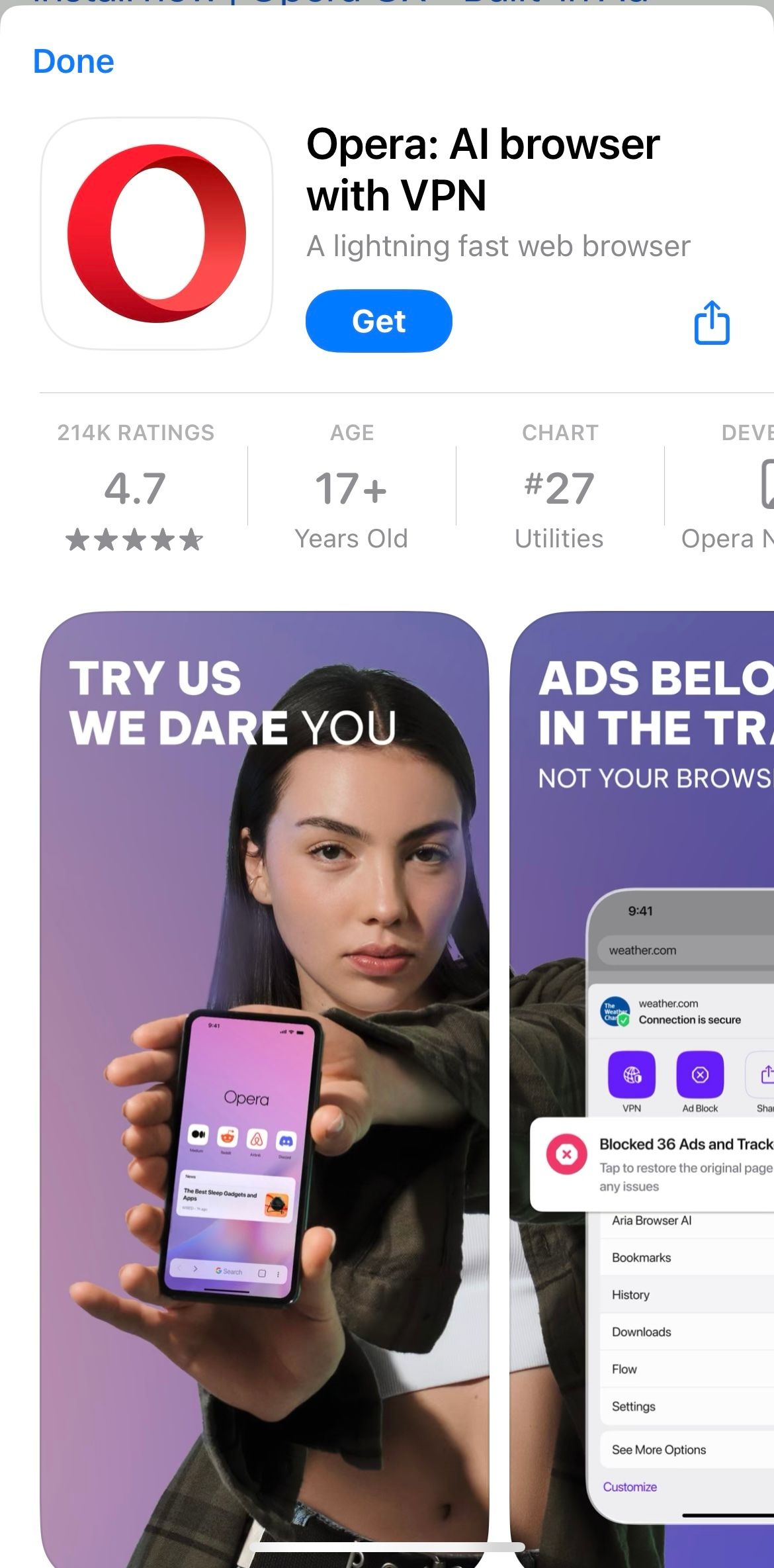
One I’ve never heard of. Even the homescreen is scary.
Until Next Week
Stay curious, think before you click, because sometimes, almost is too much.
Connie
UP NEXT: I’ll try ALL the AI browsers and give you a quick overview/guide. Don’t download anything until you know what it is and if it is anything but free.