This week, a childhood friend sent me something unexpected.
A letter I'd written him in 1978. I was in college, worrying about classes, relationships, summer jobs, and the future.
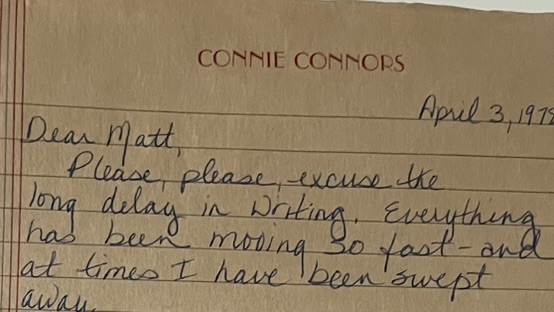
"Everything has been moving so fast — and at times I have been swept away."
Apparently I've been worried about the pace of change for nearly fifty years. The drama queen in me had to portray it as swept away.
Which may be why the Pope's recent reflections caught my attention. His novella-length essay sparked more drama over pelvic robots than the warnings. Underneath it all are the familiar questions: What will it do to us? Will it make us less creative? Less connected? Less human?
In what felt like a choreographed moment, right after the letter from the childhood friend, came a text from an old friend, Brad.
A few years after writing the letter to Matt, I was in my early twenties, working with my first big PR client, Scholastic. My assignment: launching the first talking word processor for children.
Today, every phone talks. Back then, it felt like science fiction.
You typed a word. The computer said it aloud. The adults were nervous. Some were worried children would start talking like the computer, very robotic and monotone. Others worried machines would interfere with real learning.
The children had a different reaction. Many would literally walk behind the monitor looking for the person.
Brad was thirteen years old when he read an article about the software. He has cerebral palsy and was convinced it would help speak more clearly. Not type better. Speak better. He wanted the software. It was expensive at the time, so I took the liberty of selling it to him for half, around $100 at the time.
A few weeks later, a handwritten letter arrived. Brad wrote that he loved the program. He told us he was showing it to teachers and principals. He proudly reported that he had earned an "A" on spelling tests because the software spoke words aloud while he spelled them.
Most importantly, he believed it was helping him pronounce words he had struggled with before.
Looking back, what strikes me isn't whether the software actually improved his speech.
It's that Brad saw possibility where everyone else saw limitations.
While the adults were debating the technology, Brad was imaging a future.
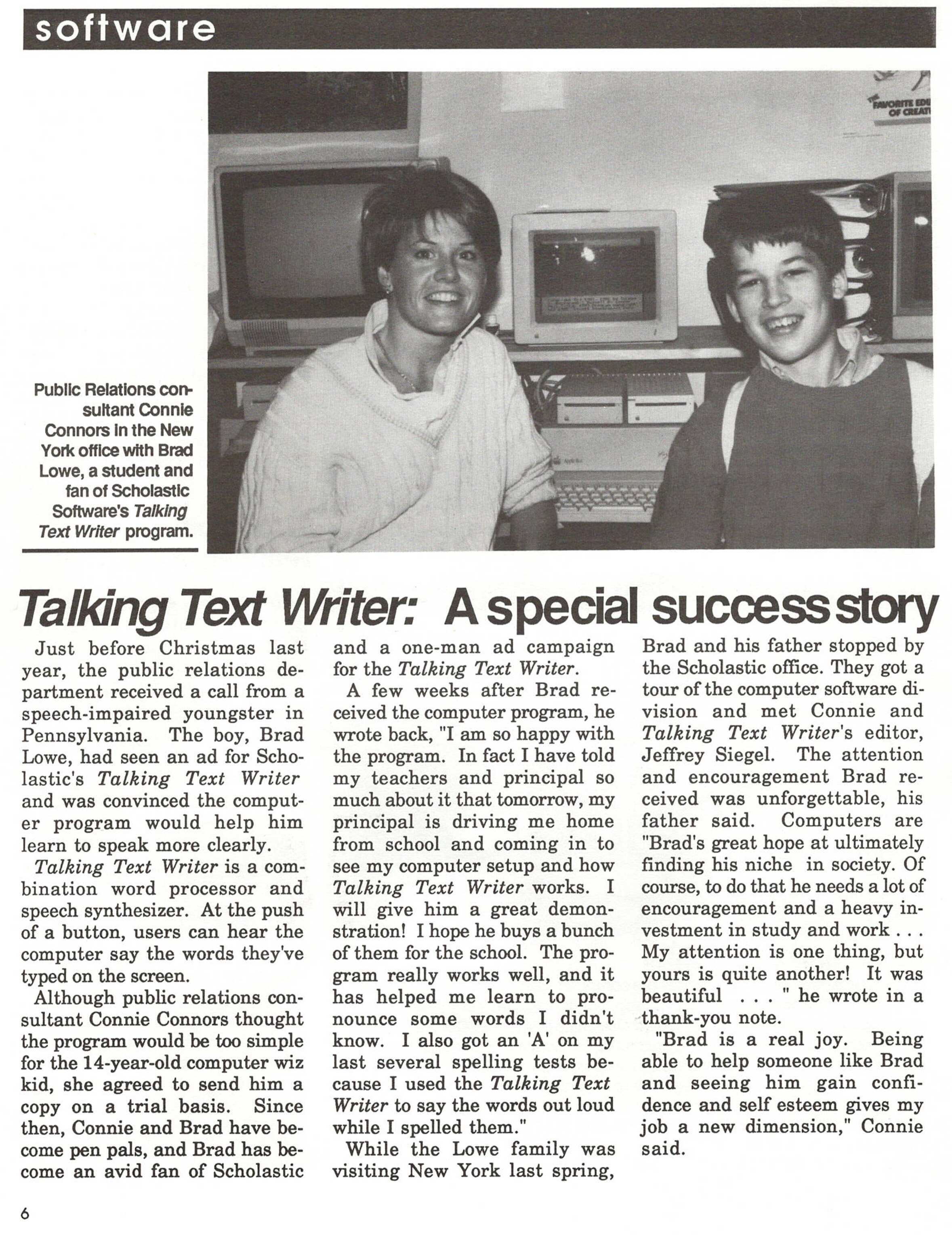
A year later, his family visited New York and we met in person.
The article Scholastic later published described computers as Brad's "great hope" for finding his place in society.
At the time, that felt optimistic. Maybe even ambitious.
Brad is now in his fifties, working late at Aberdeen, helping manage a large-scale software platform update used by the Army. His parents once worried he might never attend college, never hold a job, never live independently. Instead, he built a career around technology.
I've been thinking about that a lot. Because we're once again surrounded by people arguing about technology.
The pattern is familiar. We spend enormous amounts of time debating what technology might take away. Far less time considering what it might unlock.
The Pope worries that AI could weaken judgment, creativity, and authentic human connection. Those concerns deserve to be taken seriously.
But Brad reminds me that another question deserves equal attention:
Who might this help? Because somewhere right now there is another Brad. A student struggling to learn. Someone trying to communicate. Someone trying to find work. Someone trying to navigate a world not built for them.
Someone using a tool not because it's trendy, but because it opens a door that was previously closed.
Those stories rarely become headlines. Fear travels faster. Possibility is suffocated by the headlines.
But possibility has a remarkable track record.
This week, Almost Intelligent turns one.
Twenty-eight issues ago, I started writing because I believed AI is a human story.
A year later, I believe that even more. Not because technology is always good. It isn't.
Not because every innovation improves lives. It doesn't.
But because behind every debate, prediction, panic, or breakthrough, there are still people.
People trying to learn. People trying to build. People trying to belong. People trying to become something more.
Forty years ago, one of those people was a thirteen-year-old boy named Brad.
And if I've learned anything from watching technology over the decades, it's this: Pay attention to the people who see possibility before the rest of us do.
WHAT'S GRABBING MY ATTENTION
From venture capitalist, Marc Andreessen:
- One of the smartest AI habits I've heard recently is this: ask the model to make the strongest case for one side of an issue, then the strongest case for the other. It's less about getting an answer than about sharpening judgment.
- Another useful move: when something is confusing, keep asking AI to explain it at progressively simpler levels. "Explain it like I'm 10." Then 5. Then 2. The real superpower may be translation, not just generation.
- And when you hit the moment where you think, "I don't know how to figure this out," that may be the best time to ask AI for help instead of giving up.
Worth thinking about.
WORTH WATCHING
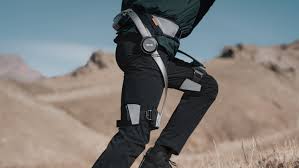
Walk it off. Exoskeletons are moving from military gear to consumer wearables. It's expensive, but it points to a future where AI doesn't just answer questions — it helps us move through the world more easily.
Hypershell's X Ultra S fits at the hips, uses AI to read movements, and adds motorized force on hills and stairs.
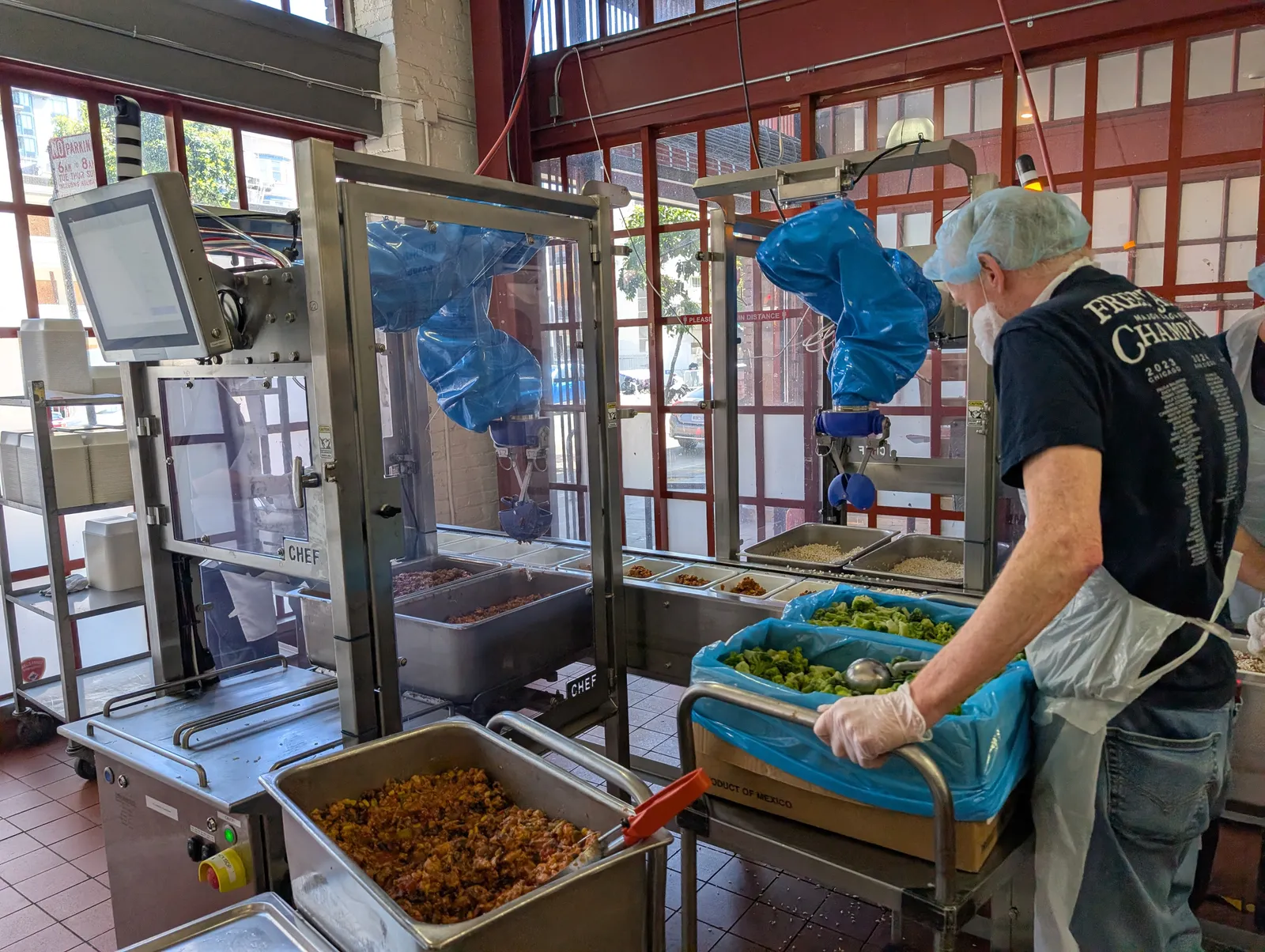
Helping hands. Chef Robotics is helping expand capacity for a nonprofit serving people with food insecurity and health issues. It's a more interesting robotics story than pure efficiency: machines augmenting human care rather than replacing it.
UNTIL NEXT TIME
Stay curious. Almost is sometimes enough. Take a peek around, look a little closer, and don't let the technology tell you where the edge is.
Connie